
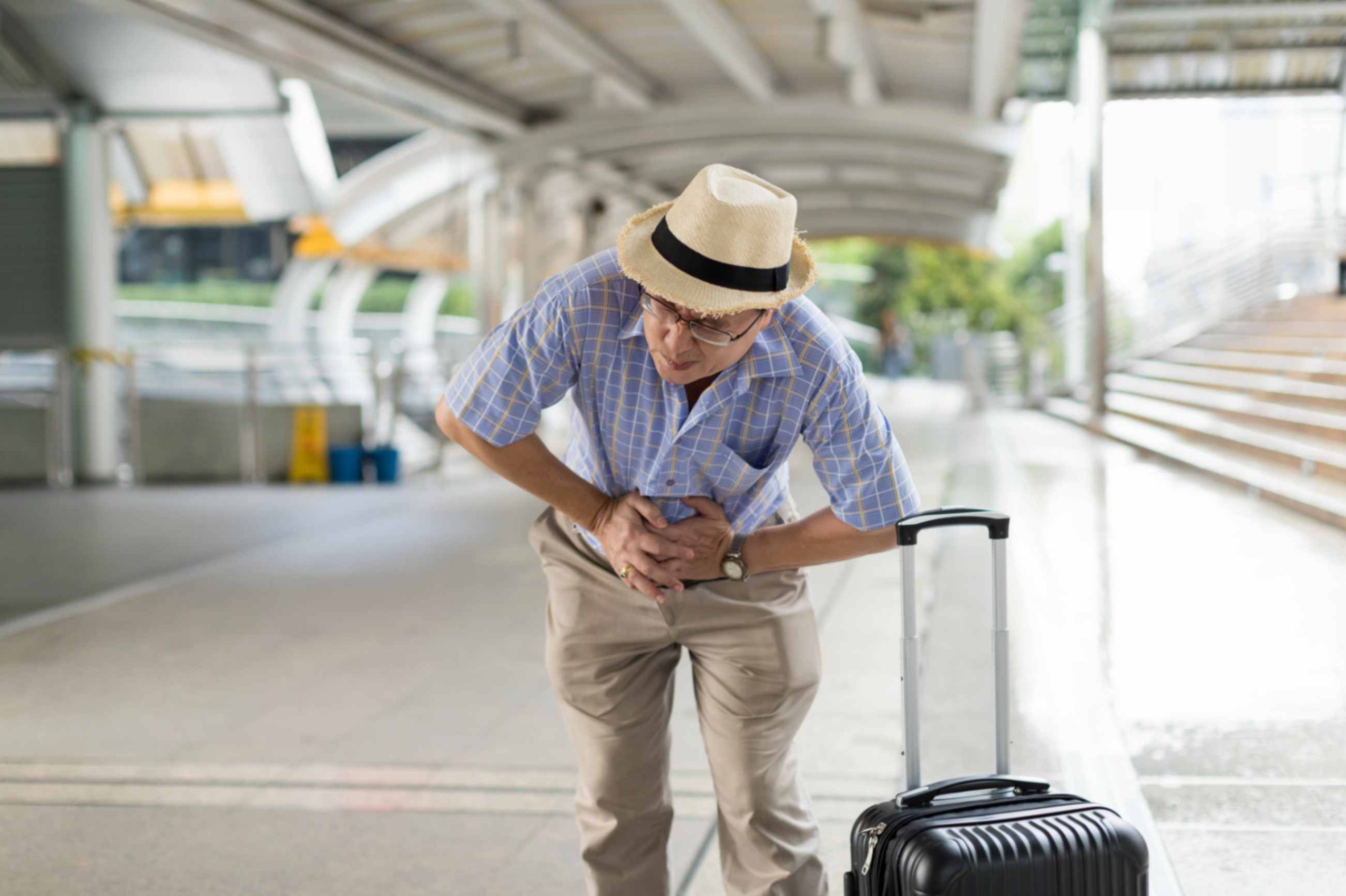

Stomach upsets are one of the most common health problems for UK travellers abroad. Most are mild cases of travellers’ diarrhoea, but some people worry about more serious illnesses such as cholera. Understanding the difference can help you prepare sensibly and know when to seek help. This guide explains both and how to reduce your risk.
What is travellers’ diarrhoea?
Travellers’ diarrhoea is the most common illness affecting people travelling abroad, particularly to regions with different sanitation standards. It is usually caused by eating or drinking something contaminated with bacteria, viruses or parasites.
Symptoms typically include loose or watery stools, stomach cramps, and sometimes nausea. For most people it is unpleasant but short-lived, settling within three to five days. Staying hydrated is the most important part of recovery.
While usually mild, it is worth seeking medical advice if symptoms are severe, last longer than a few days, or are accompanied by a high fever, blood in the stools, or signs of significant dehydration.
What is cholera and how is it different?
Cholera is a bacterial infection caused by contaminated water or food. It is much less common than ordinary travellers’ diarrhoea and is mainly a risk in areas with poor sanitation, limited access to clean water, or during humanitarian emergencies and outbreaks.
The key difference is severity. Cholera can cause profuse, watery diarrhoea that leads to rapid and dangerous dehydration. While many cholera infections are mild or without symptoms, severe cases need urgent medical treatment to replace lost fluids.
| Feature | Travellers’ diarrhoea | Cholera |
| How common | Very common in travellers | Uncommon; mainly outbreak and high-risk areas |
| Main cause | Contaminated food or water (various bugs) | Contaminated water or food (cholera bacteria) |
| Typical severity | Usually mild, settles in a few days | Can be severe with rapid dehydration |
| Key risk | Discomfort and disruption to your trip | Dangerous fluid loss in severe cases |
| Prevention | Food and water hygiene | Food and water hygiene; vaccine for higher-risk travel |
How can I avoid stomach illness while travelling?
Good food and water hygiene is the single most effective way to reduce your risk of both travellers’ diarrhoea and cholera. Practical steps include:
- Drink safe water. Stick to bottled water with an intact seal, or water that has been boiled or properly purified. Avoid ice unless you know it is made from safe water.
- Be careful with food. Eat food that is freshly cooked and served hot. Be cautious with salads, unpeeled
fruit, and food that has been left standing. - Peel it, boil it, or leave it. A simple rule of thumb for fruit and vegetables in higher-risk areas.
- Wash your hands. Wash regularly with soap and water, or use an alcohol-based hand gel before
eating. - Pack sensibly. Consider taking oral rehydration sachets so you can replace fluids and salts quickly if
you do become unwell.
Staying well hydrated is especially important if you do get a stomach upset. Oral rehydration salts, available from any pharmacy, are an effective way to replace lost fluids and salts.
Does the cholera vaccine help, and who is it for?
A cholera vaccine is available in the UK and may be recommended for travellers visiting areas with a higher risk of cholera, such as those travelling to outbreak regions, aid and relief workers, or people with limited access to safe food and water.
The cholera vaccine is taken as an oral course before travel rather than as an injection. It is not routinely needed for most package holidays, but it can be a sensible precaution for higher-risk trips. A travel health consultation will help you decide whether it is appropriate for your destination and itinerary.
At Anna Pharmacy, our pharmacists can assess whether the cholera vaccine is suitable for your trip and provide it as part of a travel health consultation, alongside wider advice on staying well abroad.
Q. What is the difference between cholera and travellers’ diarrhoea?
Ans.Travellers’ diarrhoea is a common, usually mild illness that settles within a few days. Cholera is a much less common bacterial infection that can cause severe, watery diarrhoea and rapid dehydration. The main
difference is severity: cholera can cause dangerous fluid loss quickly. Both are linked to contaminated food
and water.
Q. How can I prevent travellers’ diarrhoea?
Ans.Good food and water hygiene is the most effective prevention. Drink sealed bottled or purified water, eat freshly cooked hot food, be cautious with salads and unpeeled fruit, and wash your hands regularly.
Packing oral rehydration sachets is a sensible precaution.
Q.Do I need the cholera vaccine?
Ans.Most travellers do not need the cholera vaccine. It may be recommended for higher-risk travel, such as visiting outbreak areas or for aid workers. The vaccine is taken as an oral course before travel. A travel
health consultation will help you decide whether it is appropriate for your trip.
Q. Where can I get the cholera vaccine?
Ans.Anna Pharmacy offers the cholera vaccine as part of a travel health consultation at its Carshalton and Hackbridge branches, with no GP referral needed. A pharmacist will assess whether it is suitable for your
destination before providing it.
Q. What should I do if I get diarrhoea while travelling?
Ans.Stay well hydrated using safe fluids and oral rehydration salts, which are available from any pharmacy. Most cases settle within a few days. Seek medical help if symptoms are severe or prolonged, or if you
have a high fever, blood in the stools, or signs of significant dehydration.